


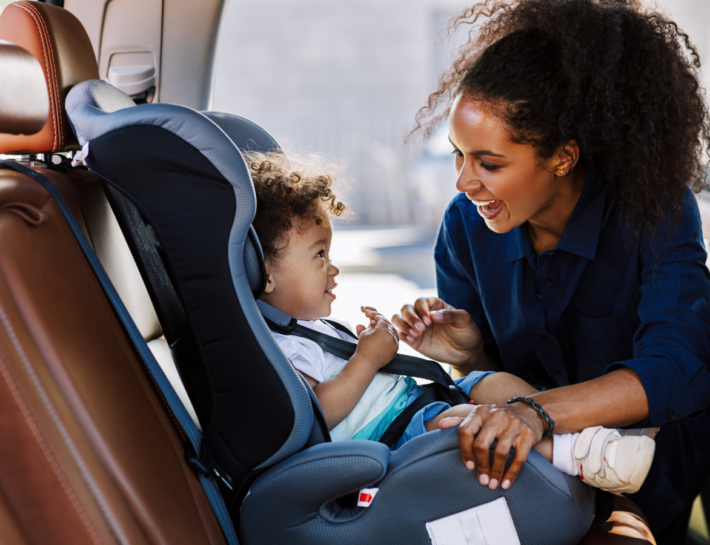
September is Infant Safety Month, making it the perfect time to check that your child’s car seat is still the right fit and being used correctly. A properly installed car seat is one of the most effective ways to protect your child in the event of a crash—but even the safest seat can’t do its job if it’s used incorrectly.
Choose the Right Seat
Current safety recommendations encourage parents to keep children:
- Rear-facing for as long as possible, until they reach the seat’s maximum rear-facing height or weight limit.
- Forward-facing with a five-point harness until they outgrow the seat.
- In a booster seat until the vehicle’s seat belt fits properly across the chest and hips.
Always follow the height and weight limits listed by your car seat manufacturer rather than moving to the next stage based on age alone.
Newer Safety Features
When shopping for a new car seat, you may notice newer safety features designed to improve protection, including:
- Load legs, which extend from the base to the vehicle floor to reduce movement during a crash.
- Anti-rebound features, which help limit the seat’s motion after impact.
- Higher rear-facing limits, allowing children to stay rear-facing longer—the safest position for young children.
Common Mistakes to Avoid
Even small mistakes can reduce a car seat’s effectiveness. Remember to:
- Keep your child rear-facing until they reach the seat’s limits.
- Replace any seat that has expired, has been involved in a moderate or severe crash, or has been recalled.
- Make sure the harness is snug—you shouldn’t be able to pinch the straps at the shoulders.
- Position the chest clip at armpit level.
- Ensure the seat moves less than one inch at the belt path.
- Avoid using accessories that didn’t come with or aren’t approved for your car seat.
Hot Weather Car Seat Safety
Living in the Cayman Islands means sunshine year-round, but it also means taking extra precautions to keep little ones safe in the heat.
Before every trip:
- Check the harness, buckle, and seat surface with the back of your hand before placing your child in the seat—they can become hot enough to burn.
- Park in the shade or use a windshield sunshade whenever possible to help keep your vehicle cooler.
- Dress your child in lightweight clothing so the harness fits snugly against their body.
- Never drape a blanket or cover over the car seat while your child is buckled in, as it can trap heat and reduce airflow.
- Inspect your car seat regularly for signs of wear. Intense heat, humidity, and UV exposure can damage plastics, straps, and fabrics over time.
- Never leave a child unattended in a vehicle, even for a minute. Cars can become dangerously hot within a very short time.
Car Seat Safety in the Cayman Islands
Need help? Parents and caregivers in the Cayman Islands can have their child’s car seat checked and installed by trained personnel at the Cayman Islands Fire Service or the Royal Cayman Islands Police Service. A professional installation check can give you peace of mind that your child is riding as safely as possible.
Quick Car Seat Safety Checklist
Before every trip, ask yourself:
- ✔ Is my child in the correct seat for their height and weight?
- ✔ Is the seat tightly installed (less than one inch of movement)?
- ✔ Is the harness snug, with the chest clip at armpit level?
- ✔ Have I checked that the buckles and seat aren’t too hot?
- ✔ Is my child dressed in lightweight clothing, so the harness fits properly?
- ✔ Has the seat expired or been damaged?
- ✔ If I’m unsure, have I booked a professional installation check?
A few extra minutes before you drive can make all the difference. This Infant Safety Month, take the opportunity to check your child’s car seat, ensure it’s installed correctly, and keep up with the latest safety recommendations. Every safe journey starts before you even turn the key.


